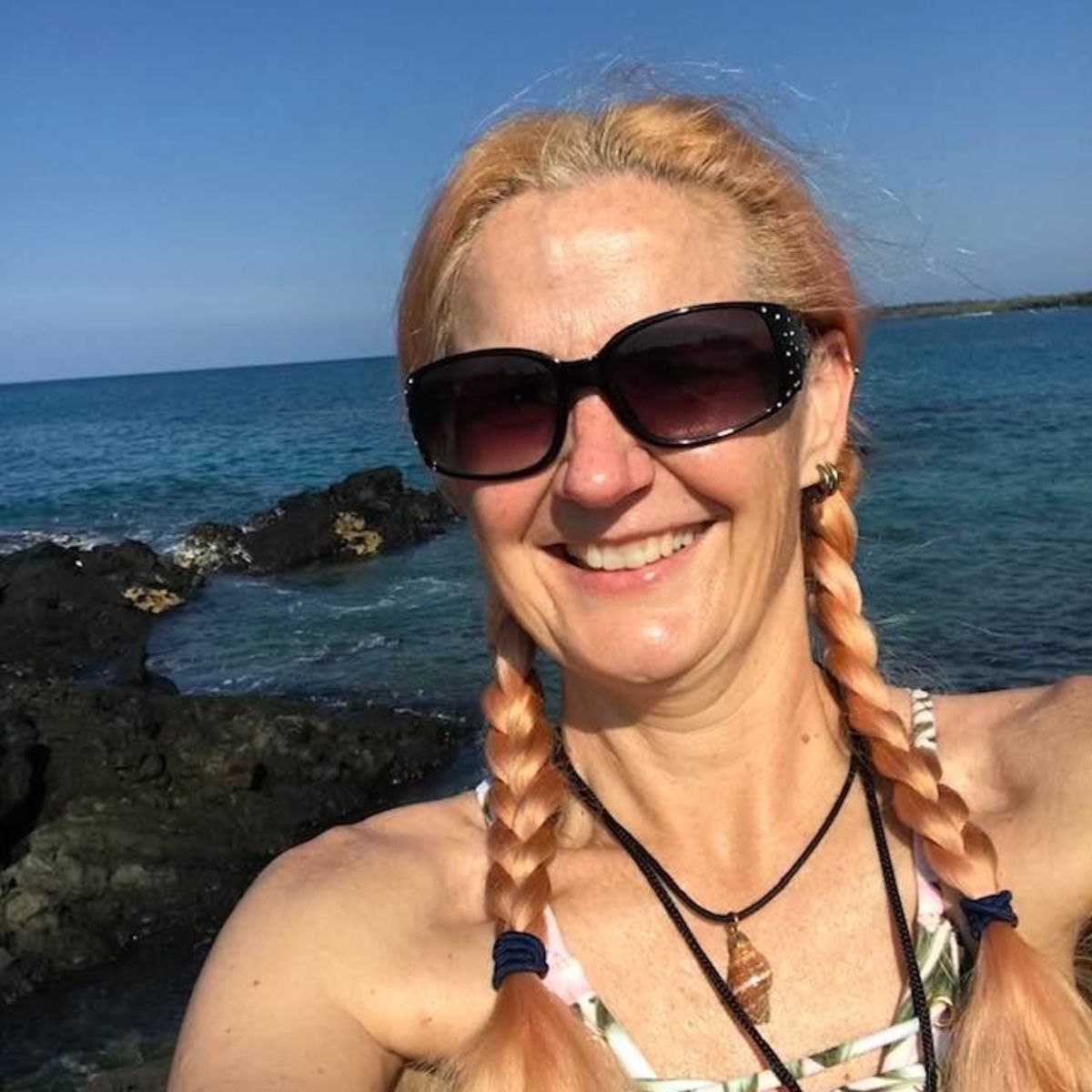

There are not many people in health innovation who have sat at every seat at the table. Jill Angelo is one of them.
She spent years as an enterprise executive at Microsoft. She then left to found Gennev, one of the first companies in the country purpose-built around menopause care, and ran it for a decade before navigating a full acquisition. Gennev was a StartUp Health portfolio company, and Jill credits her time in the community as foundational to how she built and navigated that journey. When that chapter closed, she had planned to take a break. Instead, a former investor connected her with Oura Health, and what was supposed to be a sabbatical turned into what she describes as a dream job: building the women's health business at one of the most closely watched wearable companies in the world.
This month, Jill joined StartUp Health co-founder Unity Stoakes for a live fireside chat with the StartUp Health community – a bit of a homecoming, as she put it. What followed was a candid, practically useful conversation – part market analysis, part founder confession, part product roadmap, and part real talk about what it means to stay grounded in the people you are actually building for.
Highlights
The category has grown up. The questions have changed.
A decade ago, women's health founders spent enormous amounts of time and energy convincing investors and partners that the category was worth taking seriously at all. That conversation, Jill told the community, is largely over.
The shift is not just cultural. It is structural. Investment in women's health innovation, including from pharma and biotech, has grown substantially, and the nature of the questions being asked has changed. The focus has moved from "why does this matter?" to "how are you thinking about her across her entire life?" The recognition that a woman's cardiovascular health is connected to her pregnancy history, that her sleep quality is tied to her menopausal transition, that each condition cannot be addressed in isolation – that framing is now widely shared, not a niche argument that needs to be made from scratch.
For founders in the community who are still early in their journey, this matters. The credibility work has been done at the category level. What is left is the work of being precise, focused, and genuinely useful.
Oura's four categories of partnership – and why outcomes anchor all of them
Oura has been building for thirteen years, beginning as a Finnish-founded sleep-tracking ring and expanding into a platform that now monitors more than 50 biomarkers, including temperature, heart rate variability, and respiratory rate. Approximately 55% of its users cite managing a chronic illness or issue as a primary reason for purchase, and its fastest-growing audience segment is women between 18 and 24.
Jill organizes the company's more than 1,000 commercial relationships into four categories. The first is research and science, including academic institutions and pharmaceutical companies that use Oura's continuous biometric data to support studies. The second is API-level integration partners – organizations that ingest Oura data to strengthen their own products, with Natural Cycles, the first FDA-cleared digital contraception platform, as a landmark example. The third is connected care, including partnerships with clinical organizations like Maven Clinic, which uses Oura data to help clinicians identify irregular cycles in women trying to conceive. The fourth, still emerging, involves the responsible use of de-identified data for AI-driven innovation, an area Jill described as active but not yet formalized, with member privacy as the non-negotiable constraint.
What runs through all four categories is the same imperative: validation. Even at Oura's scale, the company continues to prioritize clinical outcomes research above almost everything else – not because the data does not exist, but because the specific, payer-credible proof points that unlock reimbursement are hard-won and take time.
During the session, Jill described a recent internal planning exercise in which the team reviewed its entire outcomes research roadmap and concluded that it had overextended. The decision: focus on two studies, done rigorously, rather than spreading resources across a larger portfolio. The reasoning was a principle any founder could apply. One validated payer success creates a trust signal that makes the next partnership easier to unlock. Get the flywheel started.
Are you ready to ask YOUR questions?
Do you want to participate in live conversations with investors and industry luminaries? When you join StartUp Health – a private community for founders, investors, buyers, and industry leaders to connect year-round – you are invited to a full calendar of interactive Fireside Chats with the most influential leaders shaping health innovation. Come with questions, learn what is working right now, and connect with industry icons.
👉 Learn more and join today.
The founder lesson she did not expect to still be learning
When Unity asked Jill what she wishes she had known earlier, she did not hesitate. The answer was about focus, and about the subtle way that survival pressure can quietly redirect a company away from what actually made it valuable.
At Gennev, she said, the team eventually began reshaping the product to meet what large employers said they wanted, expanding to all 50 states, adding primary care capabilities, stretching the original vision to fit a broader enterprise buyer profile. In hindsight, she believes the smarter path would have been to demonstrate extraordinary, undeniable success in a smaller, well-defined market first, and let that proof pull the next opportunity toward them, rather than chasing breadth before the depth was there.
It was a lesson, she noted, that still comes up in Oura's own planning discussions. The question is always the same: what was the original intention for this user, and are we still serving that, or have we started building for somebody else?
The conversation continued – and the community asked the hard questions
What made this session distinctive was the quality of the questions from the StartUp Health community. Founders working in longevity, eating behavior, post-discharge care, brain health diagnostics, molecular sensing, and value-based care payment modeling all brought their own challenges into the room and pressed Jill on where Oura's roadmap intersects with theirs.
The session covered payer strategy, the economics of subsidy versus price reduction, how AI is being applied to correlate biometric streams at the individual level, and whether continuous biosensing will ever extend meaningfully beyond wearables to molecular and biochemical sensing. The short answer on that last question: Jill believes it will, and she encouraged the founders pushing in that direction to keep going.
We are not sharing the full conversation here – that is available exclusively to StartUp Health members.
Want to be in the room?
StartUp Health hosts live Fireside Chats with founders, executives, investors, and government leaders throughout the year, and community members attend live, ask their own questions, and connect directly with guests like Jill. Members also get access to full recordings of every past session.
If you are a builder or decision maker in health innovation and want access to these conversations – plus everything else the StartUp Health community offers – learn more and join today at startuphealth.com.
