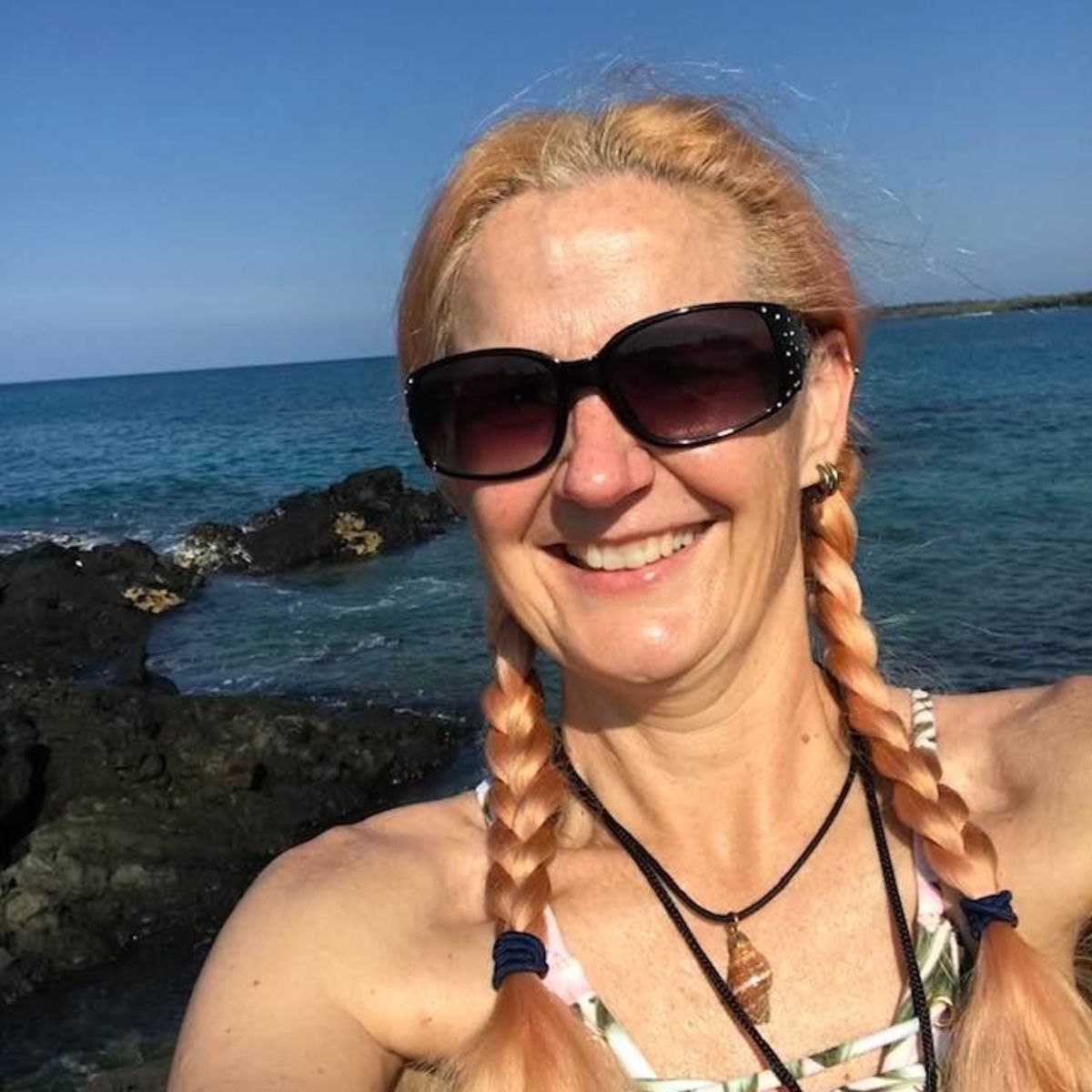

The Convergence Hiding in Plain Sight
For decades, the connection between what we eat and how we feel was treated as common sense that somehow never made it into clinical practice, investment theses, or food company boardrooms. That is changing fast. And Kim Fisher has a front-row seat.
As Chief Impact Officer of StartUp Health's Food as Medicine Moonshot, Director of Programs at UC Davis's Innovation Institute for Food and Health, and Founding Director of Food & Health Angels, Fisher sits at the intersection of research, capital, and entrepreneurship in one of the most consequential categories in health. She has been an entrepreneur herself, a startup mentor, an incubator builder, and now a connector of the entire ecosystem trying to make food genuinely nourishing for every person on the planet.
Her entry into this world was personal. When her daughter was diagnosed with Type 1 diabetes at age 13, Fisher found herself in a hospital where the conversation about food was startling in its limitations. "They said to her, 'Here's how you take insulin for Cheetos and here's how you take insulin for Coca-Cola,'" she recalls. "And I just was taken aback by the way people talked about food in this space where food was everything in terms of impacting your health."
That moment redirected her life's work.
A Career Built on Building
Fisher's path to food and health runs through the heart of the startup world. She founded a software company, fell in love with the speed and intensity of building something from nothing, sold it, and then spent years running the Women's Technology Cluster incubator, helping other founders do the same. She went on to work with the City of San Jose, leading biotech and international market access programs. Helping other entrepreneurs avoid the mistakes she had made and accelerate toward real impact became her calling.
When the Innovation Institute for Food and Health at UC Davis came into view, she recognized the fit immediately. The institute's mission is to make the food people love healthier for all people and the planet. That framing matters. It is not about asking consumers to change their behavior. It is about changing what is in front of them.
"We don't believe that people can really change their behaviors all that much," Fisher says. "It's up to us to really put in front of the consumer something they love and just have it be healthier for them."
At UC Davis, Fisher works alongside researchers using cutting-edge molecular science to understand food in ways that simply were not possible before. One example: 99% of what is in our food is still uncharacterized at the molecular level. The institute is part of the Periodic Table of Food Initiative, funded by the Rockefeller Foundation and the American Heart Association, which is working to map that dark matter of food and, with AI, identify which molecules may carry specific health benefits. The potential to design foods that target IBD, metabolic dysfunction, or nutrient deficiency is no longer science fiction.
Why the Moment Is Now
Fisher is direct about what has changed. GLP-1s have altered the cultural and commercial conversation around metabolic health at scale. More than 15% of Americans have tried these medications. And 92% of Americans are metabolically unhealthy, a number that signals systemic failure and, for innovators, a massive unmet need.
"This is the first time ever that I can think of where everybody's coming along," Fisher says of the shift she is seeing among large consumer goods companies. Major food brands are coming to UC Davis in numbers the institute cannot fully accommodate, seeking partnerships with startups, pathways to acquisition, and insight into where innovation is heading. The consumer pull is real. The corporate appetite is real. What is lagging, for now, is early-stage capital.
That gap is exactly why Fisher launched Food & Health Angels, a standalone angel investment network open to investors willing to write checks as small as $10,000. The network pools capital so startups see a single clean line on their cap table, and its thesis is precise: investing in early-stage companies that apply science, data, and technology to improve metabolic health, performance, and healthy longevity. Two areas of focus anchor it, ingredient and product innovation powered by molecular science, and metabolic health solutions including biosensors, non-invasive tracking, and programs that integrate nutrition into care.
"Food venture capital has really gone into a downturn right now," she acknowledges. "But there's incredible consumer pull and demand from big companies for healthier foods. The only piece that's missing is that early stage funding, and that will come back."
Are you ready to tell YOUR story?
Members of our Health Moonshot Communities are leading startups with breakthrough technology-driven solutions for the world’s biggest health challenges. Exposure in StartUp Health Media to our global audience of investors and partners – including our podcast, newsletters, magazine, and YouTube channel – is available to StartUp Health Members. If you’re mission-driven, collaborative, and ready to contribute as much as you gain, you might be the perfect fit.
👉 Learn more and join today.
The Future She's Building Toward
Ask Fisher where she hopes the field lands in 10 or 20 years and she describes a world of precision nutrition: passive biomarker monitoring, personalized food delivery calibrated to individual metabolic needs, and crucially, a food supply where the default options are nourishing rather than harmful.
The Rockefeller Foundation has put a sharp number to the cost of the status quo: the United States spends approximately $1.1 trillion growing, distributing, and consuming food, and then spends another $1.1 trillion addressing the health conditions that food causes. Redirecting even a fraction of that toward innovation is the kind of systemic shift Fisher believes is now within reach.
She sees the Food as Medicine Moonshot at StartUp Health as the connective tissue for the broader effort, linking entrepreneurs, investors, policymakers, and researchers around a shared goal. And she is energized by the adjacency to StartUp Health's Cardiometabolic & T1D Health Moonshot Community, a community that understands viscerally why what we eat is inseparable from how we live.
A Call to the Ecosystem
Fisher's message to founders is grounded in urgency and optimism in equal measure. The science is advancing. The consumer is ready. The big companies are paying attention. What the field needs now is more innovators willing to work in this space, and more investors willing to back them at the earliest stages.
"I feel like entrepreneurs and innovators have the opportunity to build quickly and to make an impact quickly," she says. "And we have the ability to define who we work with and to work with really smart people who are all passionate about creating something."
That is the energy Kim Fisher is bringing to the Food as Medicine Moonshot, and the energy she is inviting others to join.
Watch on StartUp Health TV
Listen on StartUp Health NOW
Founders and investors interested in connecting with the Food as Medicine Moonshot can learn more at startuphealth.com. To learn more about Food & Health Angels, visit fhangels.org. To explore the Innovation Institute for Food and Health at UC Davis, visit foodandhealth.ucdavis.edu.
Today’s Sponsor
Your AI is resolving tickets. Is it keeping customers?

Resolution rates look great. But Gladly's 2026 Customer Expectations Report reveals the metric most CIOs are missing — and what the data says about where AI investments actually translate into retention, not just throughput.
